Why Your Car Won't Start
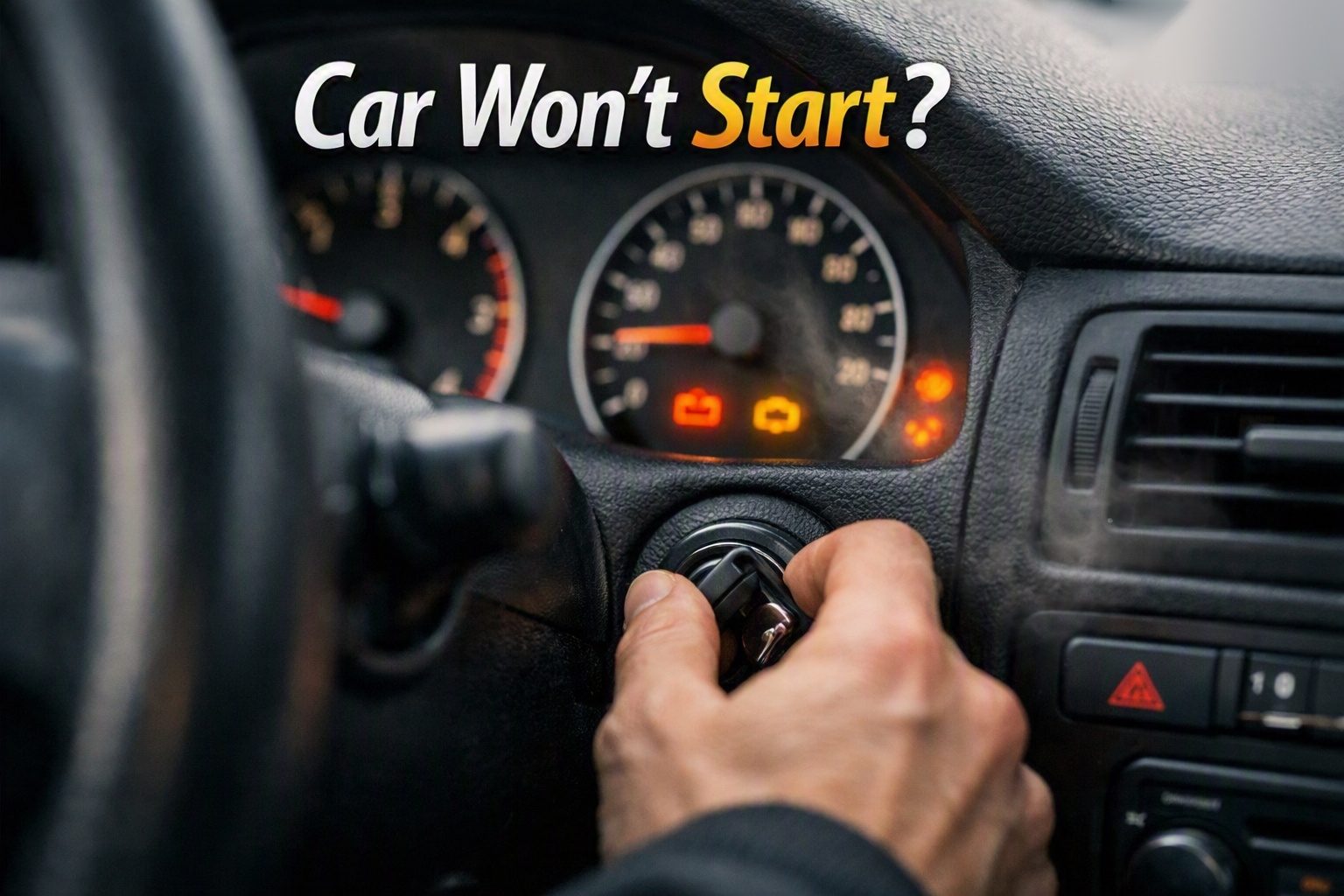
A car that won't start is one of the most common reasons UK drivers search for help online, and the fix depends entirely on how it fails. An engine that stays completely silent points somewhere different than one that clicks, and both are different again from an engine that cranks over normally but never catches. Getting this distinction right is the fastest way to avoid paying for parts you don't need.
Three systems have to work together for an engine to start: the battery and starter motor have to turn the engine over, the ignition and fuel systems have to deliver spark and fuel at the right moment, and the engine management system has to allow it all to happen. A fault in any one of them can leave you stranded, but each produces a slightly different symptom.
Match Your Symptom To A Cause
Car Clicks But Won't Start
A rapid clicking from under the bonnet almost always means the starter motor isn't getting enough current — usually the battery or its terminals.
Car Turns Over But Won't Start
The engine spins normally but doesn't fire, which shifts suspicion away from the battery and toward fuel delivery or ignition.
Won't Start But Battery Is Good
A confirmed healthy battery rules out the most common cause and narrows the search to the starter, immobiliser or fuel system.
Won't Start In Cold Weather
Low temperatures reduce battery output and thicken engine oil, which is why starting problems spike every winter.
Won't Start After Sitting
A car that was fine last week but won't start now often points to a slow parasitic drain or fuel that's gone stale.
How To Narrow It Down Yourself
Before assuming the worst, it's worth spending two minutes listening to what actually happens when you turn the key. This single check separates the vast majority of starting faults into two camps: electrical (battery, starter, connections) or mechanical/fuel-related (fuel pump, ignition, sensors).
- Turn the key or press start and listen closely. Silence, a single click, rapid clicking and a normal crank-with-no-fire all point in different directions.
- Check the dashboard lights when you turn the key to the "on" position — dim or flickering lights usually mean a weak battery.
- Look at the battery terminals for white or blue corrosion and make sure both clamps are tight.
- Note the last time the car was driven. A car left for two or more weeks is a strong candidate for a flat battery or degraded fuel.
- Consider the temperature — starting problems that only appear in cold weather usually implicate the battery or glow plugs (diesel).
Typical Repair Costs
| Likely Cause | Typical UK Cost |
|---|---|
| Replacement car battery (fitted) | £80 – £180 |
| Starter motor replacement | £200 – £450 |
| Fuel pump replacement | £300 – £700 |
| Ignition coil or spark plugs | £60 – £250 |
These are broad UK guide prices for parts and labour and will vary by garage, make and model.
Frequently Asked Questions
Why won't my car start at all?
Common causes include a flat or failing battery, a faulty starter motor, immobiliser or key fob issues, or a fuel delivery fault. The exact symptom when you turn the key usually points to which system is at fault.
How do I know if it's the battery or the starter motor?
A battery fault usually causes dim dashboard lights and slow or clicking cranking. A starter motor fault often produces a single loud click or a whirring sound with no engine movement, even with a fully charged battery.
Is it safe to keep trying to start the car?
Repeated attempts can further drain a weak battery or flood a petrol engine. If the car doesn't start within two or three short attempts, stop and check the battery connections before trying again.
Not Sure What's Wrong With Your Car?
MotorLoom analyses the symptoms you describe and points you toward the most likely cause in under a minute.
Get My Free Fault ScanLast reviewed 2026-09-08 by the MotorLoom editorial team.