What Different Car Smells Mean
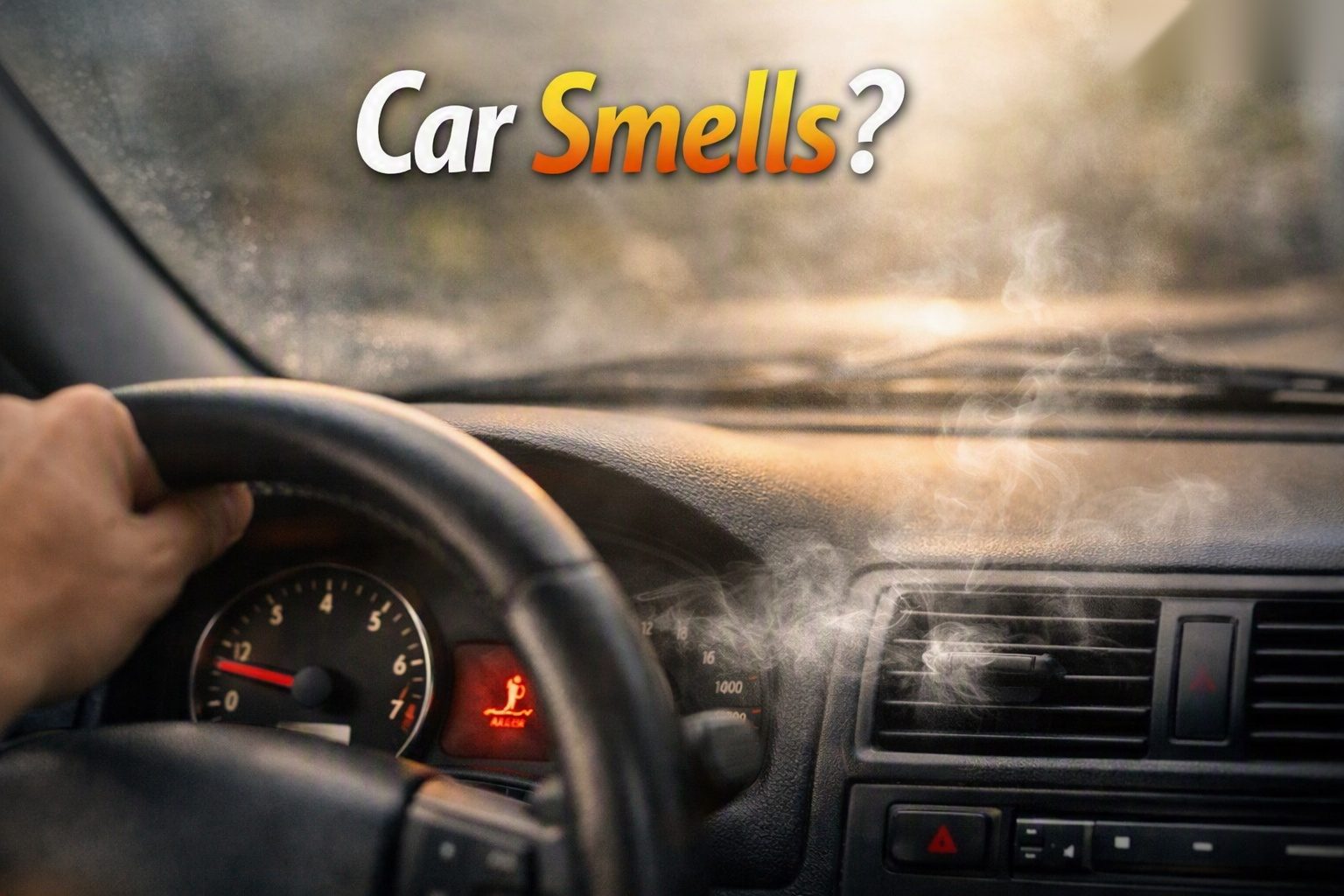
Smell is one of the earliest warning signs a car gives you, often appearing before any dashboard light or performance change. Because different smells come from very different systems — electrical, fuel, cooling, exhaust — correctly identifying the smell itself is most of the diagnostic work.
Match Your Smell To A Cause
General Burning Smell
An acrid, general burning smell can come from an electrical fault, an overheating component, or friction somewhere in the drivetrain.
Burning Oil Smell
A distinct oily, slightly sweet burning smell usually means oil is leaking onto a hot engine or exhaust surface.
Fuel Smell
A strong petrol or diesel smell should always be treated seriously due to the fire risk it can represent.
Sweet Coolant Smell
A sweet, slightly syrupy smell almost always means coolant is leaking somewhere in the engine bay or cabin heater system.
Rotten Egg Smell
A sulphurous rotten egg smell is a classic sign of a catalytic converter or fuel mixture problem.
A strong fuel smell, or any burning smell accompanied by visible smoke, should be treated as urgent. Pull over safely, switch off the engine, and don't continue driving until the source has been identified.
Why Smell Often Comes Before A Warning Light
Many faults — a small oil leak dripping onto a hot exhaust manifold, a slipping drive belt, a coolant leak that hasn't yet dropped the level enough to trigger a sensor — produce a noticeable smell well before they affect a measurable reading the engine computer monitors. That's exactly why the smell itself is often the earliest and most useful clue you'll get.
Describing A Smell Accurately Helps
Smell is subjective and hard to put into words, but the details matter more than they might seem. Note whether the smell is sweet, sharp, oily, sulphurous, or rubbery; whether it's noticeable from inside the cabin, from the engine bay with the bonnet open, or only after the car has been driven for a while and parked; and whether it appears constantly or only in specific conditions, such as after braking or refuelling. These details are exactly what the guides on this page use to separate one likely cause from another.
Frequently Asked Questions
Why does my car smell of burning?
A general burning smell can come from an electrical fault, an overheating clutch or brake, or oil or another fluid leaking onto a hot surface — the exact smell and where it's strongest helps narrow this down.
Is a fuel smell always dangerous?
A strong, persistent fuel smell should always be taken seriously due to the fire risk. Pull over, switch off the engine, and have it checked before driving further.
Why does my car smell like rotten eggs?
A sulphurous smell is most often linked to the catalytic converter, sometimes caused by an overly rich fuel mixture forcing it to work harder than designed.
Not Sure What's Wrong With Your Car?
MotorLoom analyses the symptoms you describe and points you toward the most likely cause in under a minute.
Get My Free Fault ScanLast reviewed 2026-09-08 by the MotorLoom editorial team.