Why Your Car Is Overheating
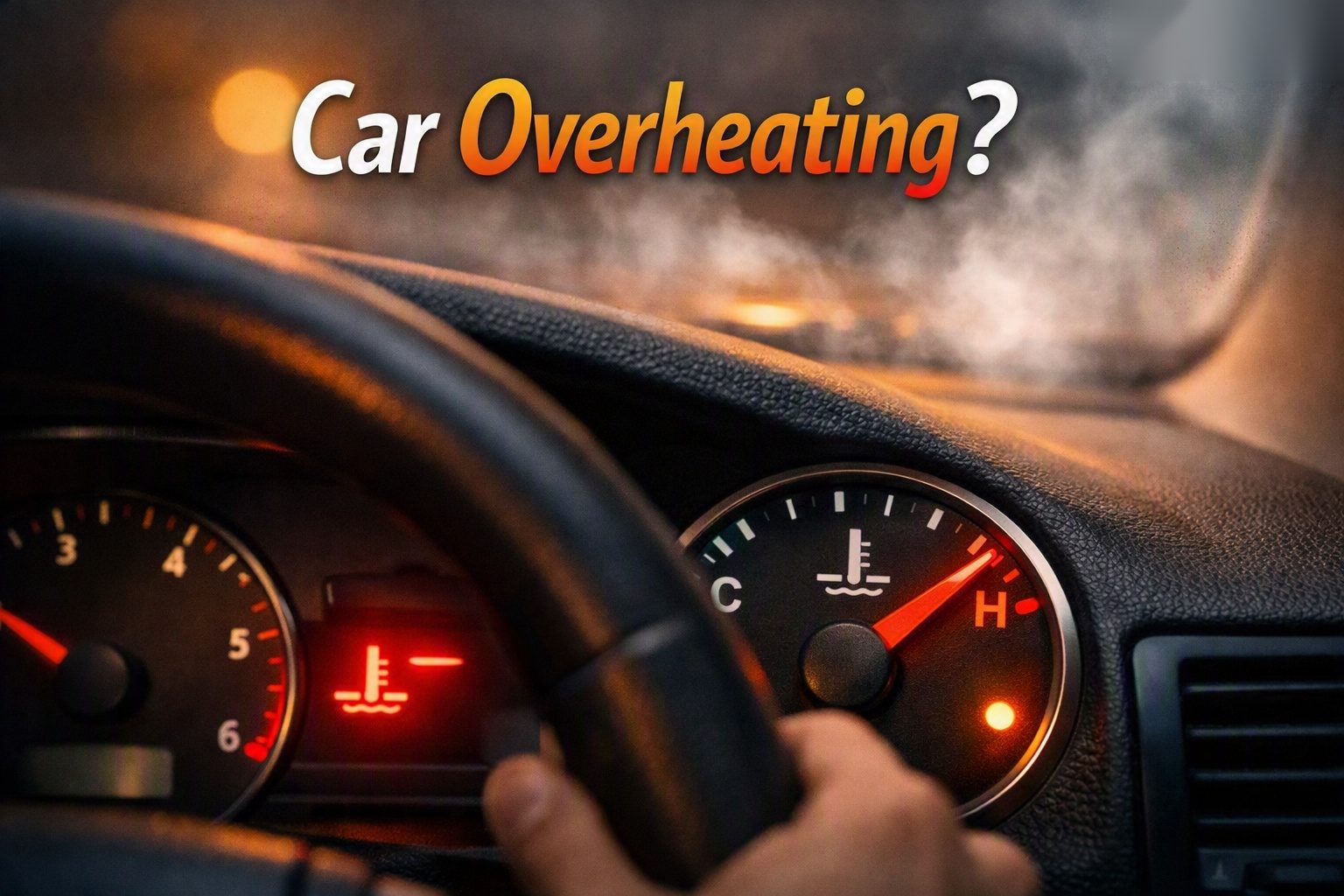
Pull over safely as soon as possible and switch off the engine. Do not open the radiator cap or coolant reservoir while the engine is hot — pressurised, near-boiling coolant can cause serious burns. Wait at least 30 minutes before opening anything under the bonnet.
Overheating happens when the engine generates more heat than the cooling system can remove, and continuing to drive on an overheating engine risks warping the cylinder head, blowing a head gasket, or seizing the engine entirely. Unlike most of the symptoms on this site, overheating is one where quick action genuinely prevents expensive damage.
Match Your Symptom To A Cause
Overheating When Driving
Rising temperature specifically at speed often points to a cooling fan, thermostat or radiator airflow problem.
Overheating At Idle
A car that overheats stationary but cools when moving usually has a cooling fan that isn't switching on correctly.
Coolant Boiling Or Bubbling
Visibly boiling coolant or bubbles in the header tank point to a pressurised cooling system that's lost its seal, or a head gasket fault.
Low Coolant Symptoms
Recognising the early warning signs of low coolant before the temperature gauge climbs can prevent overheating altogether.
Overheating Warning Light
What the dashboard temperature warning light actually means and how urgently you need to react to it.
The Core Cooling System, Briefly
Coolant is circulated by a water pump through the engine block, picking up heat, then through the radiator, where airflow (helped by an electric cooling fan at low speed) removes that heat before the coolant returns to the engine. A thermostat regulates flow to keep the engine at its ideal operating temperature. A fault anywhere in this loop — pump, fan, thermostat, radiator, hoses, or the coolant level itself — can lead to overheating.
Typical Repair Costs
| Likely Cause | Typical UK Cost |
|---|---|
| Coolant top-up / leak repair | £20 – £150 |
| Thermostat replacement | £100 – £280 |
| Cooling fan or fan motor | £120 – £350 |
| Water pump replacement | £250 – £600 |
| Head gasket replacement | £600 – £1,600 |
Frequently Asked Questions
What should I do if my car starts overheating?
Pull over safely and switch off the engine as soon as possible. Do not open the radiator cap or coolant reservoir while hot, and avoid driving further until the cause has been identified.
Can I keep driving a short distance if it's overheating?
It's best not to. Even a short distance driven while overheating can be enough to warp a cylinder head or blow a head gasket, turning a cheap fix into an expensive one.
What usually causes a car to overheat?
Common causes include low coolant from a leak, a failed thermostat, a cooling fan that isn't switching on, or a failing water pump.
Not Sure What's Wrong With Your Car?
MotorLoom analyses the symptoms you describe and points you toward the most likely cause in under a minute.
Get My Free Fault ScanLast reviewed 2026-09-08 by the MotorLoom editorial team.